
Why Is My Heat Pump Not Heating My House?

Common reasons your Heat Pump May Be Blowing Cold Air.

When the weather turns cold, the last thing you want is for your heat pump to run continuously while your house never seems to get warm.
Maybe the air coming from your vents feels cool. Maybe the temperature inside your home keeps dropping even though the thermostat is set to heat. Or perhaps you have noticed ice building up on the outdoor unit.
Naturally, you start wondering: What's wrong with the heat? Why is my heat pump not heating my house?
The answer depends on what your system is doing.
Some heat pump behaviors that seem unusual are completely normal, while others can indicate a problem that needs professional attention. Understanding the difference can help you avoid unnecessary worry and recognize when it's time to call an HVAC technician.
At Holm Heating and Cooling, we believe homeowners should understand how their heating systems work and know what to look for when something doesn't seem right. If your heat pump continues to struggle to heat your home, professional heat pump repair can help identify the cause
1. Your Heat Pump May Be Producing Warm Air That Doesn't Feel Very Warm
One of the most common reasons homeowners think their heat pump isn't heating is that the air coming from the vents doesn't feel as hot as the air produced by a traditional gas furnace. That's because heat pumps work differently.
A gas furnace generates heat by burning fuel. A heat pump transfers heat from the outdoor air into your home, even when outdoor temperatures are relatively cold.
Because of this difference, a heat pump typically delivers air at a lower temperature than a gas furnace. The air may feel lukewarm or even slightly cool against your skin, particularly when the room is already warm.
That doesn't automatically mean the system isn't working.
The more important question is whether the heat pump is actually raising and maintaining the temperature inside your home.
What to look for: If your home gradually reaches the thermostat's set temperature and remains comfortable, the system may be operating normally. If the indoor temperature continues falling or the system cannot keep up with the heating demand, further investigation may be needed.
2. Your Heat Pump May Be in Defrost Mode

Have you ever walked outside on a cold morning and noticed that your heat pump is covered in frost, releasing a cloud of steam, or making a different sound than usual?
It can look concerning, but your system may simply be going through a normal defrost cycle.
During cold, damp weather, frost can accumulate on the outdoor coil. When that happens, the heat pump periodically reverses its operation to warm the outdoor coil and remove the frost.
During this process, you may notice:
The outdoor fan temporarily stops running.
Steam rises from the outdoor unit.
The system makes a different sound for a short period.
The air coming from your indoor vents feels cooler than usual.
Auxiliary heat may operate to help maintain indoor comfort.
These behaviors can be normal during defrost.
However, the system should return to normal heating operation after the cycle finishes.
When should you be concerned? If the outdoor unit remains heavily encased in ice, the system repeatedly struggles to heat your home, or the defrost cycle doesn't appear to clear the frost, it may need to be inspected.
Never try to chip ice away from the outdoor coil. You could damage the equipment.
3. Your Thermostat Settings May Be Part of the Problem
Sometimes the issue isn't a failed component. It may be related to how the thermostat is configured.
Start by checking the following:
System mode: Make sure the thermostat is set to Heat rather than Cool or Fan Only.
Temperature setting: Confirm that the set temperature is higher than the current room temperature.
Fan setting: Auto is generally the appropriate setting for normal operation. With On selected, the indoor fan may continue running between heating cycles and circulate air that doesn't feel warm.
Auxiliary heat: If your system has auxiliary heat, make sure you understand how it is displayed and when it operates.
Avoid repeatedly switching the thermostat to Emergency Heat just because the air feels cooler than expected. Emergency Heat is intended for particular situations, and using it unnecessarily can increase energy costs.
If the thermostat settings look correct but the house still isn't warming up, the system may need further diagnosis.

4. Your Air Filter May Be Restricting Airflow
Your heat pump depends on adequate airflow to transfer heat effectively.
When the indoor air filter becomes excessively dirty, airflow can be restricted. Depending on the system and conditions, that can reduce heating performance and contribute to other operating problems.
Check your filter according to the manufacturer's instructions and replace it if it is dirty or due for replacement.
Also, make sure supply vents and return-air grilles aren't blocked by furniture, rugs, or other objects.
If replacing the filter doesn't improve performance, don't assume the filter was the only problem. Low airflow can have other causes, and a technician may need to investigate further. Regular HVAC maintenance helps identify airflow restrictions and other developing issues before they lead to larger problems.
5. Your Outdoor Unit May Have an Ice Problem
A light coating of frost on a heat pump's outdoor coil during cold weather can be normal.
The problem is when ice accumulates and doesn't clear as expected.
Excessive ice can interfere with the outdoor coil's ability to absorb heat. Depending on the cause, the system may struggle to warm your home or run longer than usual.
Possible causes include:
A defrost control problem.
Restricted airflow around the outdoor unit.
A fan or other component malfunction.
A refrigerant-related problem.
Operating conditions that prevent normal defrosting.
Homeowners can safely look at the unit from the outside and make sure leaves, snow, or other obstructions aren't blocking the surrounding area. Keep the manufacturer's required clearance around the equipment.
Don't remove panels, handle wiring, or attempt to melt or chip away ice yourself.
If thick ice persists or returns repeatedly, schedule a professional inspection. If your system cannot maintain a comfortable temperature, professional heating repair may be needed to restore proper operation.

6. Your Heat Pump May Be Struggling in Very Cold Weather
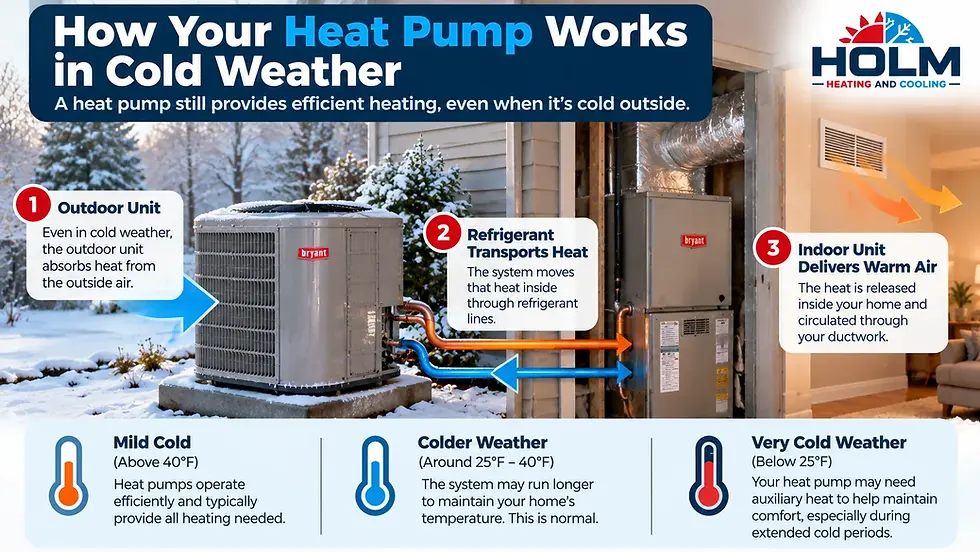
Heat pumps can provide effective heating in cold weather, but their capacity and efficiency vary with outdoor temperature and the particular equipment installed.
As outdoor temperatures drop, some systems have to work harder to keep up with the home's heating demand.
Many homes have auxiliary electric heat or another supplemental heat source to help when the heat pump cannot meet the full demand on its own.
If your home is taking longer to warm up during a cold spell, that doesn't necessarily mean the system is broken. However, a system that cannot maintain a reasonable indoor temperature, runs continuously without making progress, or produces a sudden change in heating performance deserves attention.
If your auxiliary heat runs frequently, it's worth discussing with an HVAC technician whether that operation is appropriate for the weather and your equipment.
The goal is to determine whether the system is operating as designed or whether a problem is reducing its heating capacity.
7. Your Heat Pump May Have a Mechanical or Electrical Problem
If the thermostat settings are correct, airflow is adequate, and the outdoor unit isn't simply going through a normal defrost cycle, a component problem may be responsible.
Possible causes include:
A failed capacitor or contactor.
A malfunctioning outdoor fan motor.
A thermostat or control issue.
A refrigerant leak or other refrigerant-system problem.
A reversing valve that isn't operating correctly.
A compressor or other major component problem.
These issues can produce similar symptoms, so guessing at the cause can lead to unnecessary expense.
A qualified HVAC technician can evaluate the system, test the appropriate components, and determine why the heat pump isn't delivering the expected heating performance.
The important thing is to identify the actual cause rather than replacing parts based on symptoms alone. If your system cannot maintain a comfortable temperature, professional heat pump repair may be necessary.

8. When Should You Call an HVAC Technician?
A heat pump doesn't have to stop working completely before it needs attention.
Consider scheduling service if:
The temperature inside your home continues dropping.
The system runs for extended periods without adequately heating the house.
The outdoor unit remains heavily covered in ice.
You hear new or unusual mechanical noises.
The system frequently switches to auxiliary heat without an obvious explanation.
The thermostat is set correctly, but the system isn't responding as expected.
Your heating performance has changed noticeably from previous winters.
If you notice burning smells, smoke, sparking, or other signs of an electrical hazard, stop using the equipment if you can do so safely and seek appropriate professional assistance. If there is smoke or fire, leave the area and call emergency services.
Don't keep resetting breakers or repeatedly restarting equipment that appears to have an electrical or mechanical fault. If your home is losing heat and the indoor temperature is becoming uncomfortable, you may need emergency HVAC repair.

What Can You Check Before Calling for Service?
Before scheduling a visit, there are a few simple checks you can perform without opening the equipment.
Confirm that the thermostat is set to Heat and the temperature is set above the current room temperature.
Check whether the indoor fan is set to Auto or On.
Inspect the indoor air filter and replace it if necessary.
Make sure the supply vents and return grilles are not blocked.
Look at the outdoor unit for heavy ice or obvious obstructions, without touching the coil or internal components.
Note any unusual sounds, thermostat messages, or changes in system behavior.
If these checks don't resolve the issue, professional diagnosis is the next step.
You don't need to figure out exactly which component has failed before calling. Your observations can help the technician understand what the system is doing and narrow down the possibilities.
Frequently Asked Questions About Heat Pumps Not Heating
Why is my heat pump blowing cold air when the heat is on?
A heat pump normally produces air that feels less hot than the air from a gas furnace. During a defrost cycle, it may also temporarily blow cooler air while melting frost from the outdoor unit. However, if the air remains cool and your home is not warming up, the system may have a problem that needs professional diagnosis.
Should I see ice on my heat pump in winter?
A light coating of frost can be normal in cold, damp weather. Your heat pump periodically enters a defrost cycle to melt that frost. If the outdoor unit remains covered in thick ice or the ice does not clear, a problem with the defrost system, airflow, or another component may be responsible. Do not chip away the ice yourself.
Why does my heat pump run constantly in cold weather?
Heat pumps may run for longer periods during cold weather because they extract heat from outdoor air and must work harder as temperatures drop. If your home maintains its set temperature, longer run times may be normal. If the temperature keeps falling or the system cannot maintain comfort, have it inspected.
Should I use Emergency Heat if my heat pump is not heating?
Emergency Heat is intended for certain situations when the heat pump cannot provide adequate heating. It typically relies on backup electric resistance heat or another auxiliary heat source, which may cost more to operate. Follow your thermostat and equipment manufacturer's instructions and contact an HVAC technician if your home is not warming up.
When should I call an HVAC technician for a heat pump that is not heating?
Call an HVAC technician if your home continues getting colder, the heat pump blows cool air continuously, heavy ice remains on the outdoor unit, or the system makes unusual noises or repeatedly turns on and off. A technician can check the system's controls, airflow, refrigerant circuit, and mechanical components to identify the cause.

The Bottom Line: Not Every Heat Pump Behavior Means Something Is Wrong
If your heat pump is blowing air that doesn't feel especially warm, running for a long time, or releasing steam from the outdoor unit, it doesn't automatically mean the system is broken.
Heat pumps operate differently from furnaces, and some behaviors are part of normal operation. But there is a difference between a system that is operating normally and one that cannot maintain your home's temperature.
Pay attention to the results: Is your home staying comfortable? Does the outdoor unit clear its frost? Does the system return to normal operation after defrosting?
If your home isn't warming up, the unit remains heavily iced, or something has changed noticeably, don't ignore it.
At Holm Heating and Cooling, our goal is to help homeowners understand their heating systems, identify problems accurately, and make informed decisions about repairs. If your heat pump is older and experiencing repeated major problems, it may be worth considering heat pump replacement.
If your heat pump isn't keeping your home warm, contact Holm Heating and Cooling to schedule a professional evaluation. We'll help determine what's happening and explain the next steps for restoring reliable heating to your home.


Comments