
Why Am I Having HVAC Problems When My System Maintenance Was just done?


This is what I sometimes hear when I arrive at a customer's home with an HVAC problem:
“I don't understand. Another company just serviced my system a couple of months ago, and now it's having a problem. I'm not using that company again.”
I can't tell you how many times I've heard some version of that statement when arriving at a customer's home for a heating or air-conditioning problem.
And honestly, I understand the frustration.
If you just paid to have your HVAC system serviced, it is reasonable to wonder why you're having a problem only a few months later.
But there is an important distinction homeowners should understand when it comes to HVAC maintenance:
Maintenance can reduce the likelihood of problems. It cannot guarantee that your HVAC system will never break down.
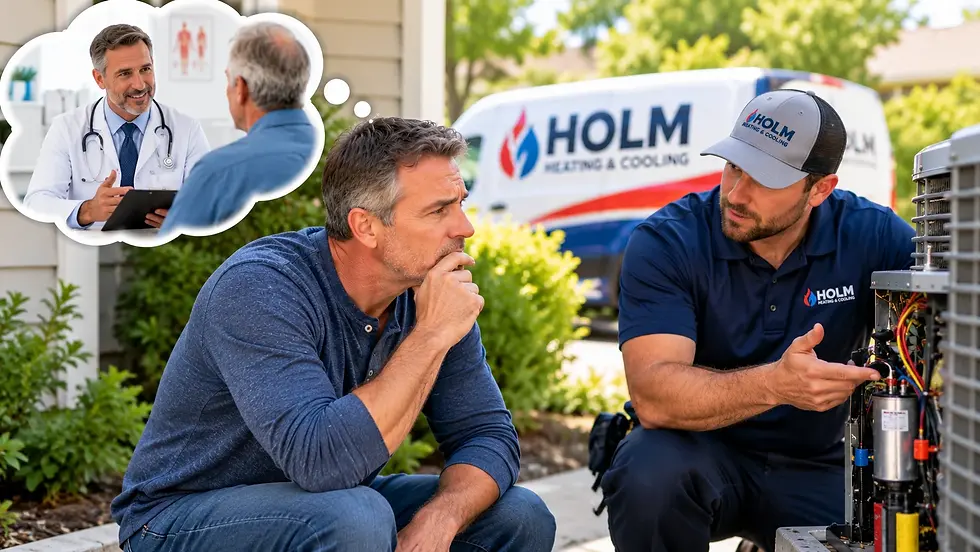
Think About It Like an Annual Physical
Here's an easy way to look at it.
It's like going to your doctor for your annual physical and then getting sick a week later.
You wouldn't necessarily say, “My doctor just gave me a physical, so how could I possibly be sick?”
The physical was a snapshot of your health at that point in time. Your doctor can identify things that are wrong or concerning, make recommendations, and help you reduce your risk of certain health problems—but that doesn't mean you can't get sick afterward.
HVAC maintenance works much the same way.
A maintenance visit gives a technician an opportunity to evaluate the condition and operation of your heating or cooling system at that particular point in time. Problems that are present can often be identified, developing issues may be caught, and recommendations can be made.
But that doesn't mean every component in the system is guaranteed to continue working perfectly after the technician leaves.
A capacitor can fail.
A motor can develop a problem.
A control board can malfunction.
An electrical component can fail unexpectedly.
A compressor can eventually experience a failure.
Maintenance is preventative care—not a crystal ball.
The goal of maintenance isn't to promise that nothing will ever go wrong. The goal is to identify problems that can reasonably be identified, reduce preventable failures, maintain system performance, and give the homeowner a better understanding of the condition of their equipment.
What Is HVAC Maintenance Actually Supposed to Do?
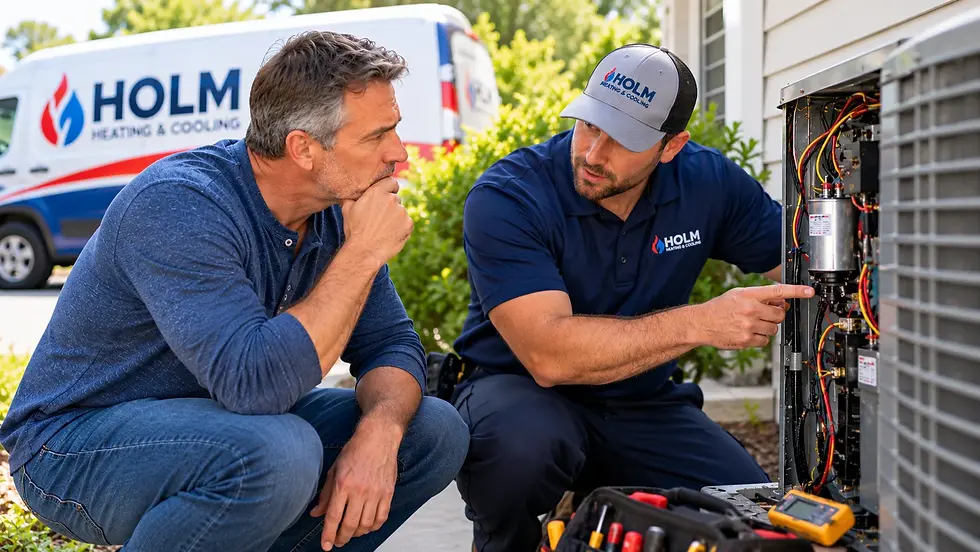
HVAC maintenance is a form of preventative care.
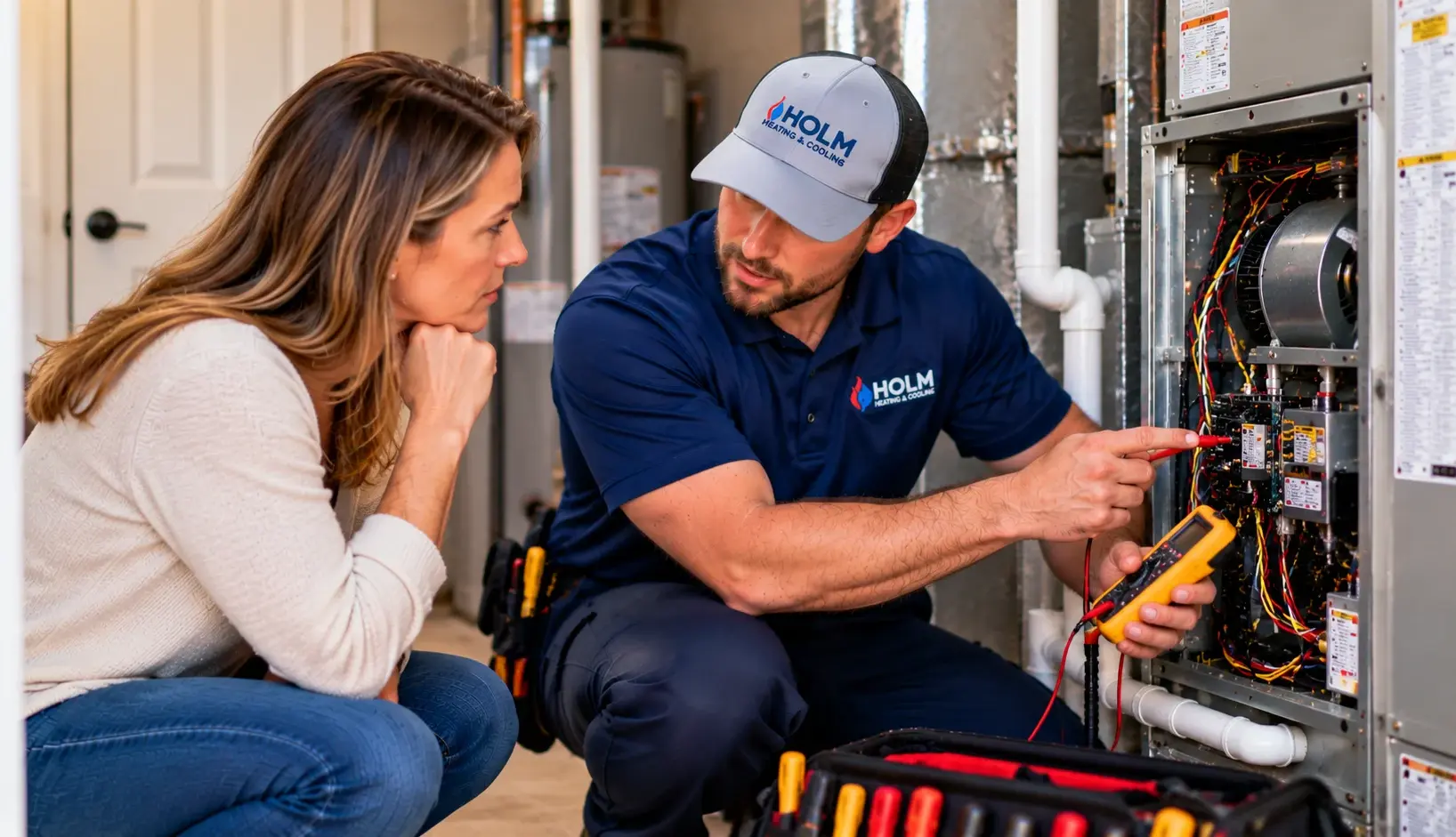
During a proper maintenance visit, a technician should be looking at the condition and operation of the system, checking for problems, identifying components that may be showing signs of wear, and making sure the equipment is operating as it should.
Depending on the type of equipment and the maintenance being performed, this can include things such as:
Checking electrical connections and components
Inspecting motors and other moving parts
Checking system operation
Evaluating airflow
Inspecting coils and other components
Checking refrigerant-related operation when appropriate
Looking for signs of abnormal wear
Checking safety controls
Inspecting the condition of the equipment
Identifying potential problems before they become larger failures
The goal isn't to predict the future.
The goal is to identify problems that can reasonably be identified at the time of the visit and reduce the chances of preventable HVAC problems after maintenance.
Why Can an HVAC System have problems Shortly After Maintenance?
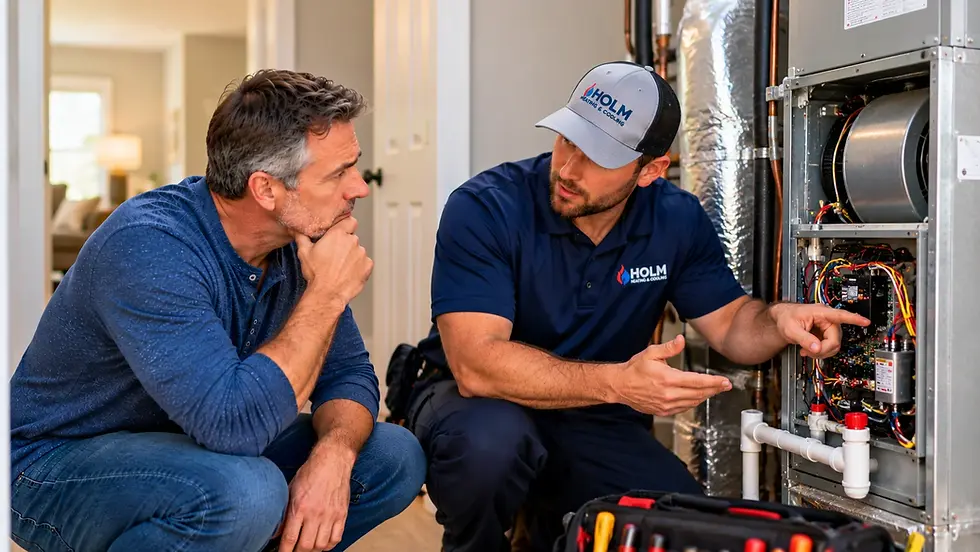
This is where expectations are important.
HVAC systems contain mechanical, electrical, and electronic components. Even when a system is operating normally during a maintenance visit, a component can fail later.
For example, a capacitor may be operating within an acceptable range during a maintenance visit and fail weeks or months later.
A motor can develop a problem.
A contactor can fail.
A control board can malfunction.
A compressor can experience a failure.
A sensor or electrical connection can develop a problem.
These types of failures aren't necessarily evidence that maintenance wasn't performed properly. If your system is no longer operating properly, professional HVAC repair can help determine what actually failed and whether the problem can be repaired.
Sometimes, a component simply fails after the technician leaves.

This is similar to maintaining a vehicle. You can have your oil changed, have the vehicle inspected, and have everything checked over—and still have a battery, alternator, starter, or other component fail unexpectedly.
Maintenance helps reduce risk. It doesn't eliminate mechanical failure.
Maintenance Doesn't Mean Your HVAC System Is Guaranteed to Be Trouble-Free
This may be one of the most important things homeowners should understand.
When a technician services your HVAC system, the technician is evaluating the condition of the equipment at that point in time.
A maintenance visit isn't a warranty against future breakdowns.
Think about it this way:
Maintenance answers the question, “How is my system doing today?”
It does not necessarily answer:
“Will every component continue working six months from now?”
There is no honest HVAC technician who can guarantee that every component in a mechanical system will continue operating indefinitely.
What a good technician can do is identify problems, abnormal conditions, excessive wear, or other warning signs that are present during the visit.
But Shouldn't Maintenance Catch Everything?
This is where things get a little more complicated.
Sometimes a maintenance visit does identify a developing problem.
For example, a technician may find that a component is showing signs of deterioration even though the system is still operating.
That is valuable information.
A homeowner may then have the opportunity to make an informed decision:
Repair the problem now
Monitor the component
Plan for a future repair
Consider replacement if the equipment is older and the repair is significant
The important thing is communication.
If a technician sees something that deserves attention, the homeowner should understand what was found and what the potential consequences are.
A good maintenance visit isn't simply about saying, “Everything looks good.”
It should help the homeowner understand the condition of their HVAC system.
Not Every HVAC Maintenance Visit Is the Same
Another important consideration is that the word “maintenance” can mean different things to different companies.
A homeowner may assume that “maintenance” means every part of the system was thoroughly evaluated.
That's why it is reasonable to ask questions.
What was actually checked?
Was anything found that needs attention?
Are any components showing signs of wear?
Is the system operating within normal parameters?
Are there any concerns that aren't an immediate problem but could become one later?
A homeowner shouldn't have to be an HVAC technician to understand the general condition of their system.
A good technician should be willing to explain what they found in terms that make sense.
The Difference Between a Developing Problem and an Unexpected Failure
This distinction can help explain many of the situations homeowners experience.
Imagine a technician performs maintenance in the spring and the air conditioner is operating normally.
Two months later, the system won't start.
The technician arrives and discovers a failed capacitor.
Does that automatically mean the previous maintenance was done incorrectly?
No.
If the capacitor was operating normally when it was checked, there may have been no reasonable way to know that it was going to fail two months later.
On the other hand, if the capacitor was already significantly out of specification during the previous visit and the homeowner was never informed, that's a different situation.
This is why the quality of the inspection—and the communication afterward—matters. The same principle applies to heating systems when a furnace or heat pump develops an unexpected problem.
What Should Homeowners Reasonably Expect From HVAC Maintenance?
At Holm Heating & Cooling, we believe homeowners should have realistic expectations.
A properly performed maintenance visit should give you a better understanding of your system's current condition and provide an opportunity to identify problems before they become larger or more expensive.
But homeowners should not expect maintenance to guarantee that the system will never have another problem.
A realistic expectation is:
Maintenance helps reduce risk, identify developing problems, maintain system performance, and potentially extend the useful life of your equipment.
It does not make the equipment immune to failure.
What Can Homeowners Do to Get More Value From Maintenance?
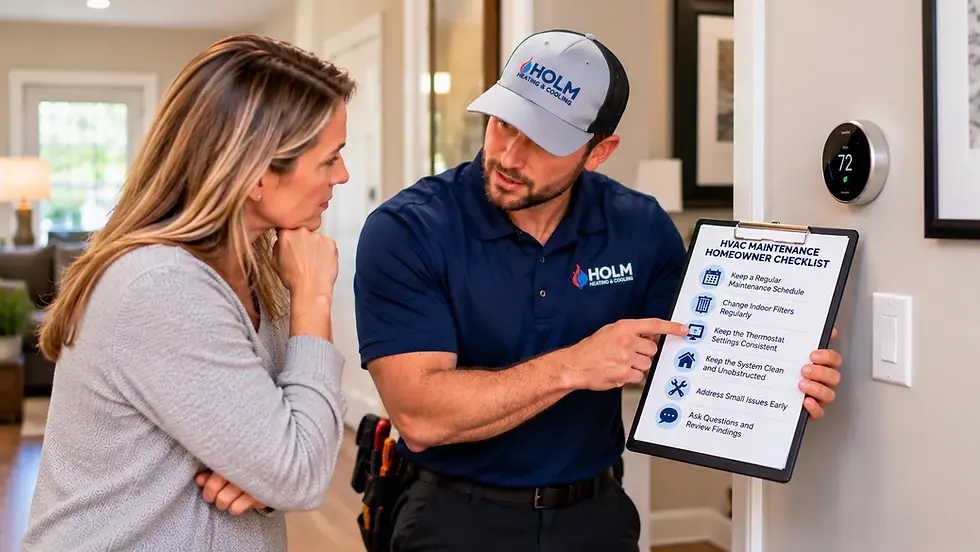
One of the best things you can do is ask questions.
After a maintenance visit, ask the technician:
“Did you find anything that concerns you?”
“Are there any components showing wear?”
“Is there anything I should plan for in the future?”
“How is the system operating overall?”
“If this were your system, is there anything you would address now?”
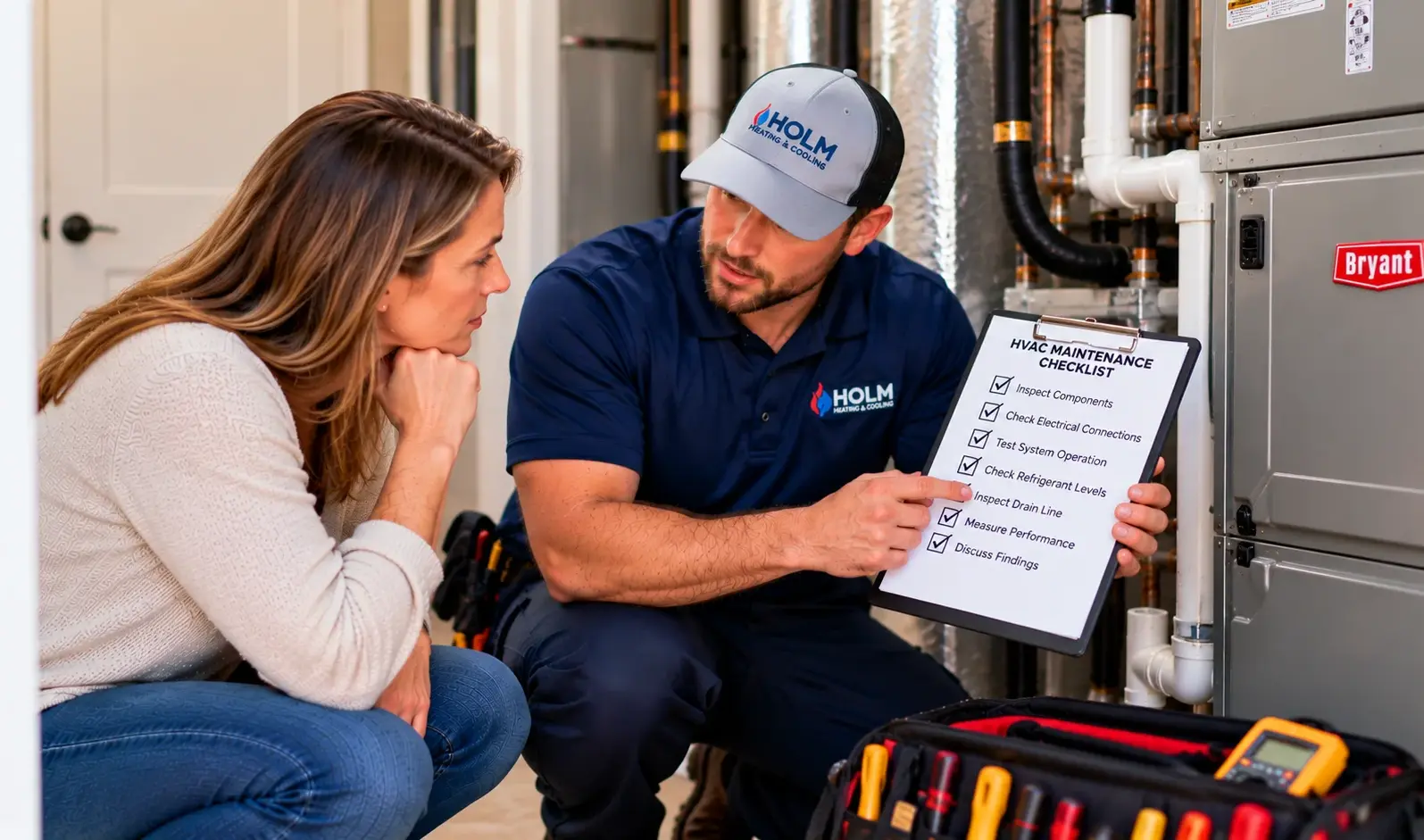
Those questions can turn a basic maintenance visit into a much more useful conversation about the condition of your HVAC system.
And if a technician recommends a repair, don't be afraid to ask why.
You should understand what failed, what is showing signs of wear, how urgent the issue is, and what could happen if you decide to wait.
Sometimes the Best Maintenance Decision Is Planning Ahead
Maintenance isn't only about preventing today's breakdown.
It can also help homeowners understand when their equipment is approaching the end of its useful life.
If your HVAC system is older and the technician is finding multiple aging components, you may have a choice between continuing to repair the equipment and planning for HVAC system replacement.
That doesn't necessarily mean you need to replace the system immediately.
It means you have information.
And having that information before the system stops working on the hottest day of the summer or the coldest night of the winter gives you more options.
Frequently Asked Questions About HVAC Maintenance
Can an HVAC system break down after being serviced?
Yes. HVAC maintenance can identify existing problems and reduce the likelihood of preventable failures, but it cannot guarantee that every component will continue operating indefinitely. A component can fail unexpectedly after a maintenance visit even when the system was operating normally at the time of service.
Does HVAC maintenance prevent breakdowns?
HVAC maintenance can help reduce the risk of breakdowns by identifying worn or developing problems, checking system operation, and keeping equipment operating properly. However, maintenance is preventative care, not a guarantee against future component failures.
What should HVAC maintenance include?
The exact maintenance process depends on the type and age of the equipment, but a professional maintenance visit should include an evaluation of system operation, electrical components, safety controls, airflow, equipment condition, and other components appropriate to the system. The technician should also explain any problems or concerns found during the visit.
How soon can an HVAC problem occur after maintenance?
There is no specific timeframe. A problem could occur days, weeks, or months after a maintenance visit—or the system could continue operating normally for years. Some component failures happen without much warning, which is why maintenance should be viewed as a way to reduce risk rather than eliminate it.
When should I consider replacing my HVAC system instead of repairing it?
Replacement may be worth considering when equipment is older, repairs are becoming frequent or expensive, major components are failing, or the system is no longer providing reliable and efficient performance. A good HVAC technician should explain the condition of the equipment and help you compare the benefits of repairing versus replacing it rather than automatically recommending one option.
The Bottom Line: Maintenance Is About Risk Reduction, Not a Guarantee
If your HVAC system was serviced two months ago and it has now developed a problem, it's understandable to ask:
“Why did this happen if I just had it serviced?”
Sometimes the answer is that a problem was developing and should have been identified.
Sometimes the answer is that a component failed unexpectedly after the maintenance visit.
The important thing is not to assume that every breakdown after maintenance means the maintenance was worthless—or that maintenance guarantees years of trouble-free operation.
HVAC maintenance is preventative care, not a crystal ball.
A good maintenance program can help identify problems, reduce the likelihood of preventable failures, maintain system performance, and give you a better understanding of the condition of your equipment.
And just as importantly, a good HVAC company should be willing to tell you what they find, explain what it means, and give you realistic recommendations without making promises they can't keep.
At Holm Heating & Cooling, our goal is simple: give homeowners honest information about their heating and cooling systems so they can make informed decisions about their homes.
If your heating or air-conditioning system isn't performing the way it should, or you've experianced and unexpected breakdown of your equipment, contact Holm Heating & Cooling to have the system properly evaluated.


Comments