
Why Is My Furnace Not Turning On? Common Causes and What to Check

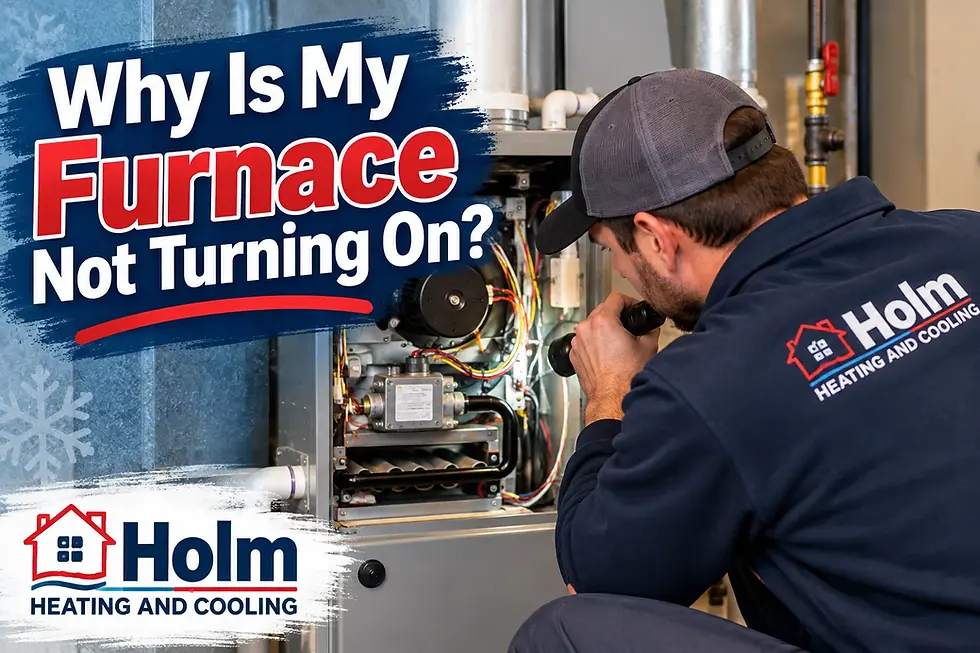
When your furnace won't turn on, it can quickly become a problem—especially when temperatures drop and your home starts getting cold.
You adjust the thermostat, wait for the heat to come on, and nothing happens. Maybe the furnace is completely silent. Maybe you hear a click or a motor running, but the burners never start. Or perhaps the furnace starts briefly and then shuts itself off.
A furnace that won't turn on can have several different causes. Some involve simple things you can safely check yourself, while others require professional HVAC diagnosis.
At Holm Heating and Cooling, we believe in finding the actual cause of a heating problem rather than guessing at parts or recommending repairs before the system has been properly evaluated.
Here's what to check when your furnace won't start, what different symptoms may mean, and when it's time to call a furnace repair technician.
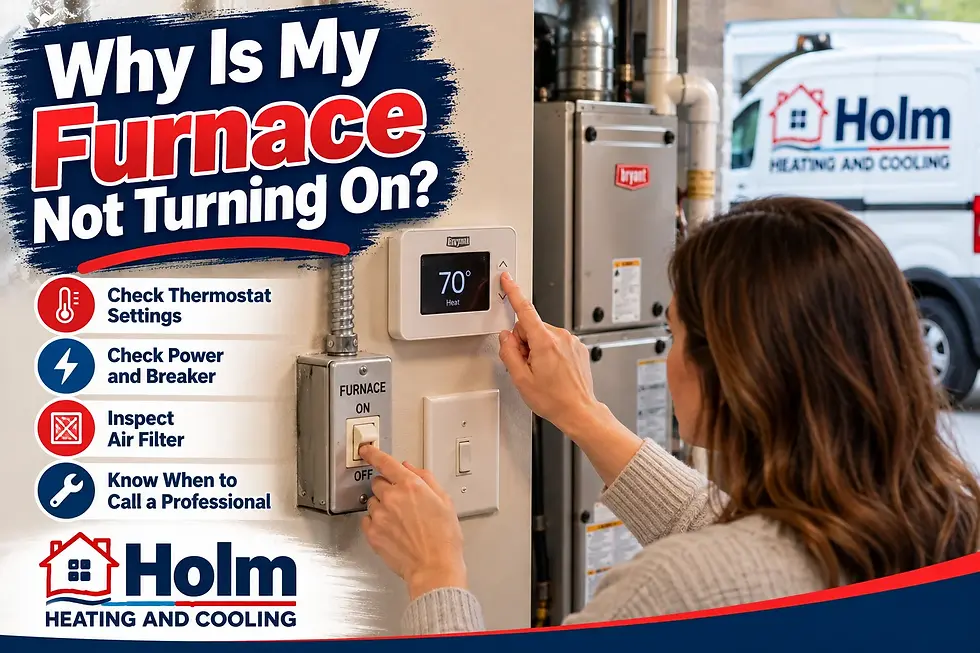
1. Check Your Thermostat Settings
Before assuming the furnace has failed, start with the thermostat.
Check the following:
Make sure the thermostat is set to Heat, not Cool or Off.
Set the temperature several degrees above the current room temperature.
If your thermostat uses batteries, check whether they need replacing.
If the thermostat has a blank screen, the thermostat may have lost power or developed a problem.
Give the furnace a few minutes to respond after adjusting the settings. Some systems have a built-in delay before starting.
If the thermostat appears to be working correctly but the furnace still doesn't respond, the issue may involve the thermostat's communication with the heating equipment, the furnace controls, or the electrical supply.
2. Check the Furnace Power Switch and Circuit Breaker
A furnace needs electrical power to operate its controls, blower, and other components—even if it uses natural gas or propane for heat.
Look for a furnace power switch, which often resembles a standard light switch and may be mounted on or near the furnace. Make sure it is in the On position.
You can also check your home's electrical panel for a breaker labeled Furnace or Heating.
If the breaker has tripped, do not repeatedly reset it. A breaker that trips again may indicate an electrical problem that needs professional attention.
Never remove furnace access panels or touch internal electrical components to troubleshoot a power issue.
If the switch and breaker appear normal but the furnace remains unresponsive, further diagnosis may be necessary.
3. Inspect the Air Filter
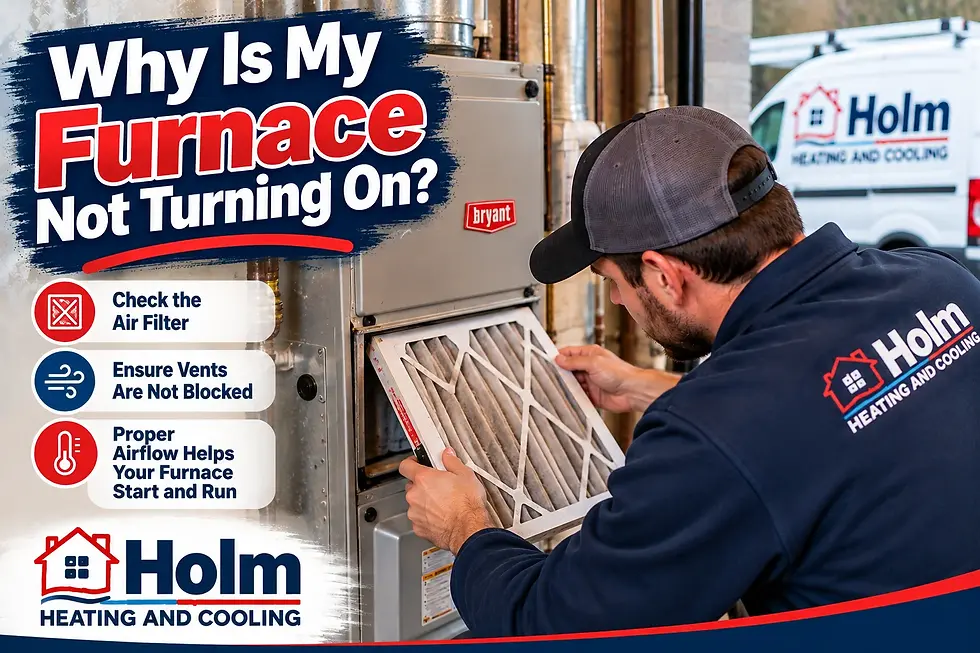
A dirty air filter can restrict airflow through your heating system. On many furnaces, restricted airflow can contribute to overheating and trigger a safety control that shuts the burners off.
This doesn't mean every furnace that won't start has a dirty filter. However, checking the filter is a simple step that can help rule out one possible cause.
If the filter is visibly dirty, replace it with the correct size and type recommended for your system. Follow the manufacturer's instructions for HVAC maintenance and make sure the filter is installed in the proper direction.
Also check that supply vents and return-air grilles aren't blocked by furniture, rugs, or other objects.
If the furnace continues to shut down or will not restart after you've addressed a dirty filter, don't assume the filter was the only problem. A safety shutdown can have other causes that need to be investigated.
4. Pay Attention to What the Furnace Does When You Turn Up the Heat
The sounds and behavior of your furnace can provide useful clues, although they don't confirm a specific failure.
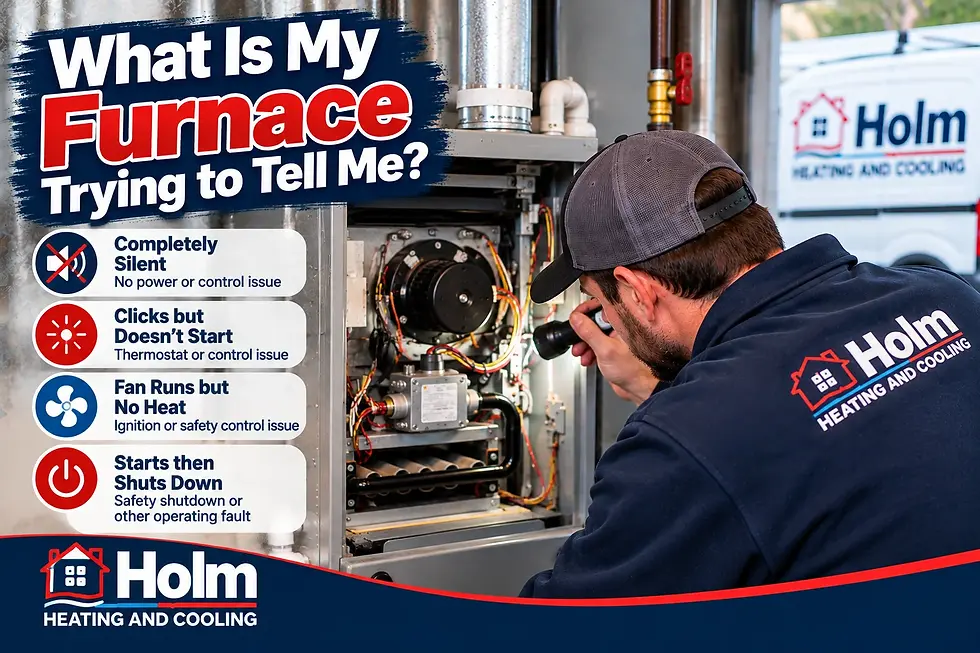
The furnace is completely silent.
Possible causes include a thermostat issue, loss of electrical power, a control problem, or a safety condition preventing operation.
You hear a click, but nothing else happens.
The thermostat may be calling for heat, but the furnace isn't completing its startup sequence. The cause could involve the controls, power supply, or another component.
A motor starts, but the burners never ignite.
On a gas furnace, the startup sequence may be interrupted by an ignition problem, a venting or pressure-switch issue, or another safety control.
The furnace starts, then shuts down shortly afterward.
Possible causes include an airflow problem, a safety control activating, a flame-sensing issue, or another operating fault.
These symptoms help narrow down the possibilities, but several different problems can produce similar behavior. A qualified HVAC technician can test the system to identify the actual cause.
5. Could the Ignition System Be the Problem?
Many modern gas furnaces use an electronic ignition system to light the burners when there is a call for heat.
If the ignition sequence doesn't work as intended, the furnace may attempt to start but fail to produce heat. The system may then shut down or make additional attempts, depending on its controls.
Other possible causes include a flame-sensing problem, a control-board issue, or a safety device preventing the furnace from operating.
These components require appropriate testing and experience. Homeowners should not attempt to clean, adjust, bypass, or replace internal ignition or safety components themselves.
If your furnace has power and the thermostat is calling for heat, but the burners won't ignite, professional furnace repair may be needed.
6. Check for Warning Lights or Error Codes
Some furnaces have a diagnostic light or display that indicates an operating fault.
If your furnace has a visible diagnostic window, you may be able to observe the indicator without removing any panels. Some manufacturers provide a fault-code chart in the owner's manual.
Record any visible code or flashing-light pattern and share it with your HVAC technician. The code may help guide the diagnostic process.
Do not remove access panels, bypass safety switches, or attempt repairs based on a code alone. A fault code is a clue—not necessarily proof that a particular part has failed.
7. When Should You Stop Troubleshooting and Call an HVAC Technician?
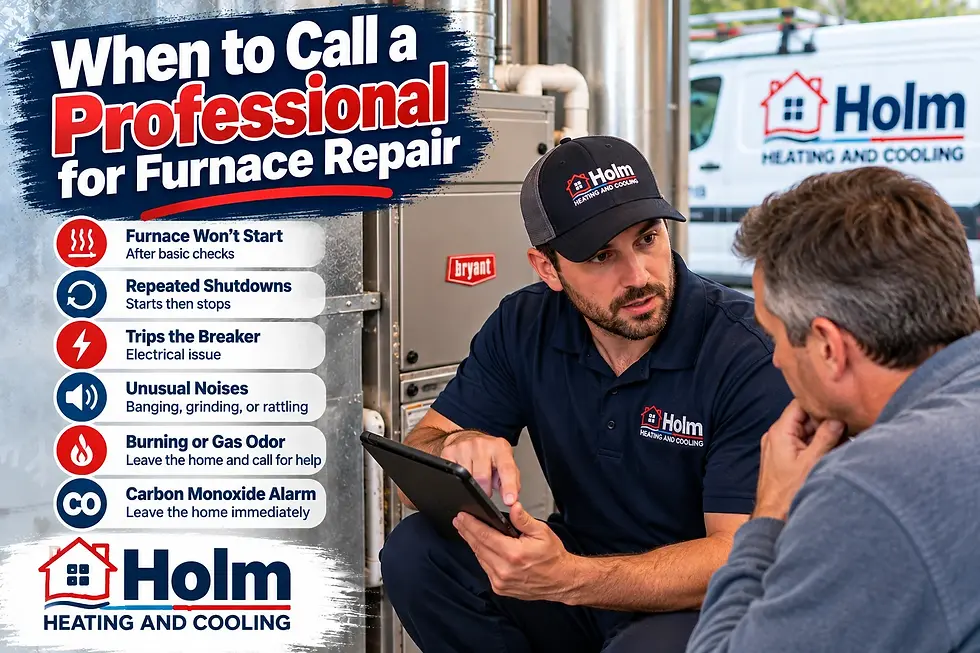
If you have checked the thermostat, confirmed the furnace switch is on, inspected the accessible air filter, and the furnace still won't start, it's time to consider professional service.
You should also arrange professional diagnosis if:
The furnace starts and shuts down repeatedly.
You hear unusual banging, grinding, or other concerning noises.
The system repeatedly trips a circuit breaker.
You notice burning or electrical odors.
The furnace displays a fault code that you cannot safely resolve using the owner's manual.
Your home is getting colder because the heating system will not operate.
Important safety warning: If you smell gas, leave the home immediately without operating electrical switches or attempting to troubleshoot the furnace. Contact your gas utility or emergency services from a safe location. If a carbon monoxide alarm sounds, leave the home and contact emergency services.
Do not attempt to repair gas lines, ignition components, wiring, or internal furnace safety devices yourself.
8. Does a Furnace That Won't Turn On Need to Be Replaced?
Not necessarily.
A furnace that won't start may have a repairable problem involving the thermostat, electrical supply, controls, ignition system, or another component. The symptom alone does not mean the entire system has failed.
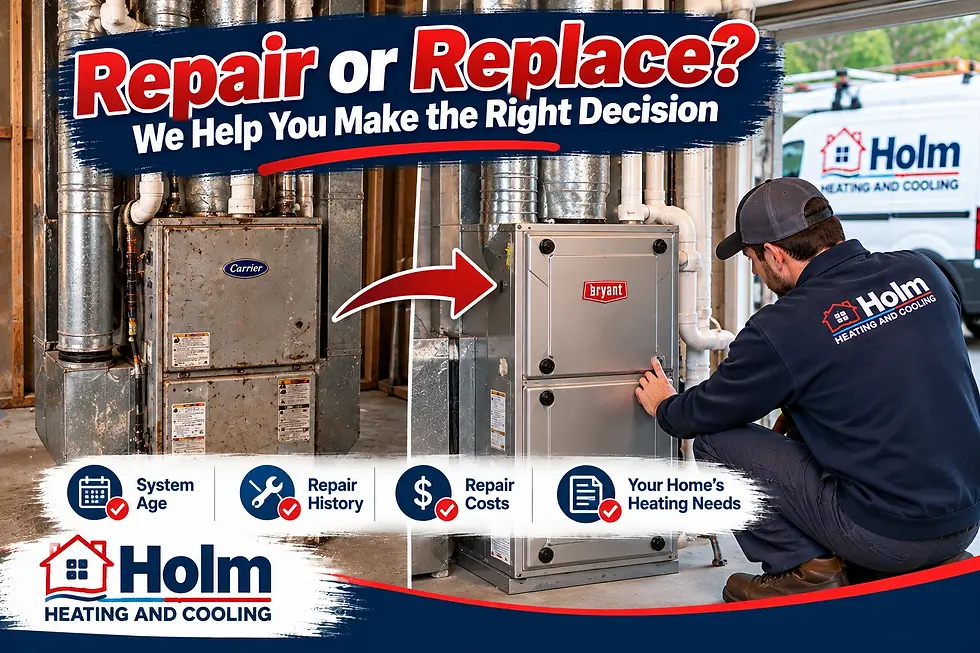
Whether repair or replacement makes more sense depends on the furnace's age, condition, repair history, parts availability, and the cost of the work needed.
If the furnace is relatively young and otherwise in good condition, repairing it may be the practical choice. If it is older, has recurring breakdowns, or needs a major repair, it may be worth comparing the repair cost with the benefits of a new furnace replacement.
At Holm Heating and Cooling, we believe homeowners should understand the problem and their options before making that decision.
Frequently Asked Questions
Why is my furnace not turning on at all?
A furnace that is completely unresponsive may have a thermostat issue, a loss of electrical power, a control problem, or a safety condition preventing operation. Start with safe external checks, such as thermostat settings and the furnace switch. If the system still does not respond, professional diagnosis may be needed.
Why does my furnace click but not start?
A click may indicate that the thermostat or a control is attempting to initiate operation, but it does not identify the cause. The problem could involve the power supply, controls, ignition sequence, or another component.
Can a dirty air filter keep a furnace from turning on?
A severely restricted filter can contribute to overheating and safety shutdowns on many systems. However, a furnace that will not start can have several other causes. Replace a visibly dirty filter with the correct type, and arrange service if the problem continues.
Should I keep resetting my furnace?
No. Repeated resets can conceal an underlying problem without fixing it. If the furnace repeatedly shuts down, a breaker trips again, or a safety control activates, stop resetting the system and contact a qualified HVAC technician.
When should I call for furnace repair?
Call for professional service if the furnace remains unresponsive after basic checks, repeatedly shuts down, makes unusual noises, trips a breaker, or shows a fault you cannot safely resolve. If you suspect a gas leak or carbon monoxide problem, leave the home and contact the appropriate emergency service.
Get Help When Your Furnace Won't Turn On
When your furnace won't start, the most important step is to identify the actual cause rather than replacing parts based on symptoms alone.
Holm Heating and Cooling provides residential heating repair and HVAC services in Wake Forest and surrounding North Carolina communities. We work to diagnose heating problems, explain our findings, and recommend practical solutions based on your system's condition.
If your furnace won't turn on and your home isn't staying warm, contact Holm Heating and Cooling to schedule professional heating service.


Comments