
Why Is My Furnace Short Cycling?

Common Causes and What to Do
When your furnace turns on and off repeatedly instead of completing a normal heating cycle, it may be short cycling.
A furnace that short cycles may run for only a few minutes before shutting off, then start again shortly afterward. While an occasional shorter cycle isn't necessarily a problem, frequent cycling can indicate an airflow issue, thermostat problem, overheating condition, equipment sizing issue, or another problem with the heating system.
Short cycling can also prevent your home from maintaining a comfortable temperature and may place additional wear on furnace components.
Before assuming you need to replace your furnace, here are some common reasons a furnace may be short cycling.

1. A Dirty Air Filter Can Restrict Airflow
One of the first things to check when a furnace is short cycling is the air filter.
As a filter becomes clogged with dust and debris, it can restrict airflow through the heating system. Reduced airflow can cause the furnace to become too hot, which may cause a safety control to shut the burners down before the heating cycle is complete.
You may notice:
Weak airflow from the vents
Uneven temperatures throughout the home
The furnace turning on and off frequently
A dirty or heavily clogged filter
Longer or inconsistent heating cycles
Check your filter regularly and replace it according to the manufacturer's recommendations.
Regular HVAC maintenance can also help identify airflow and equipment problems before they lead to more serious heating issues.

2. Your Furnace May Be Overheating
A furnace is designed with safety controls that help protect the equipment if internal temperatures become too high.
If airflow is restricted or a component isn't operating properly, the furnace may overheat and shut the burners off as a safety precaution.
Possible causes of overheating can include:
A severely dirty air filter
Blocked return-air grilles
Closed supply registers
Dirty or restricted ductwork
Blower motor problems
Other airflow restrictions
If the furnace repeatedly starts, runs for a short time, and shuts down before the home reaches the thermostat setting, overheating may be one possible cause.

3. Your Thermostat Could Be Causing the Problem
The thermostat controls when your furnace receives a call for heat.
If the thermostat isn't accurately sensing the temperature in your home, it may cause the furnace to turn on or off at the wrong time.
Thermostat problems can include:
Incorrect temperature readings
Poor thermostat placement
Electrical problems
Communication issues
A malfunctioning thermostat
Make sure your thermostat isn't located near a drafty door, heat-producing appliance, direct sunlight, or another source that could affect its temperature reading.
If the thermostat appears to be reading the room temperature incorrectly, professional heating diagnosis can help determine whether the thermostat or another part of the heating system is responsible.

4. Your Furnace May Be Too Large for Your Home
An oversized furnace can heat a home very quickly.
That might sound like a good thing, but a furnace that produces significantly more heat than the home requires may reach the thermostat setting quickly and shut off before completing a normal heating cycle.
The furnace then cools down and starts again when the thermostat calls for heat.
This repeated starting and stopping is one reason proper equipment sizing is important.
If your furnace has short cycled since it was installed, the size and furnace installation should be evaluated before assuming another component has failed. If it is determined the furnace is oversized furnace replacment may be necessary.
5. There Could Be an Airflow Problem
Your furnace needs adequate airflow to operate properly.
Even if the filter is clean, other restrictions can affect airflow throughout the system.
For example:
Blocked return-air grilles
Closed supply vents
Restricted ductwork
Dirty blower components
Improperly sized ductwork
Blower motor problems
If some rooms are consistently much warmer or colder than others, airflow or ductwork could be contributing to the problem.
Improving airflow may help the furnace operate more normally and distribute heat more evenly throughout the home.

6. A Flame Sensor or Safety Control Could Be Involved
Gas furnaces use safety and control components to monitor the heating process.
A dirty or malfunctioning flame sensor, limit control, pressure switch, or another safety component can cause the furnace to shut down when it shouldn't.
Depending on the problem, you may notice:
The burners starting and shutting down quickly
The blower continuing to run after the burners shut off
Repeated attempts to ignite
Diagnostic lights on the furnace
The furnace failing to complete a normal heating cycle
Because these components are part of the furnace's safety and combustion system, internal diagnosis should be handled by a qualified furnace repair professional.

7. Your Furnace Could Have an Electrical or Control Problem
Modern furnaces rely on control boards, sensors, switches, motors, and other electrical components to coordinate the heating cycle.
If one of these components isn't operating properly, the furnace may start and stop unexpectedly.
Electrical or control problems can sometimes cause symptoms such as:
Frequent cycling
Failure to start
The blower running without heat
Repeated ignition attempts
Diagnostic lights flashing
The furnace failing to respond correctly to the thermostat
Proper testing is important because replacing a component without identifying the actual cause may not solve the problem.

8. Cold Weather Can Change Furnace Run Time
It's normal for your furnace to operate more frequently when outdoor temperatures drop.
During a particularly cold night, your heating system may need to run longer and more often to maintain the temperature inside your home.
That doesn't necessarily mean the furnace is short cycling.
The concern is when the furnace repeatedly starts and stops after only a short period, especially when your home isn't reaching the temperature set on the thermostat.
If the system is cycling normally and maintaining a comfortable indoor temperature, increased run time during very cold weather may simply reflect the increased heating demand.
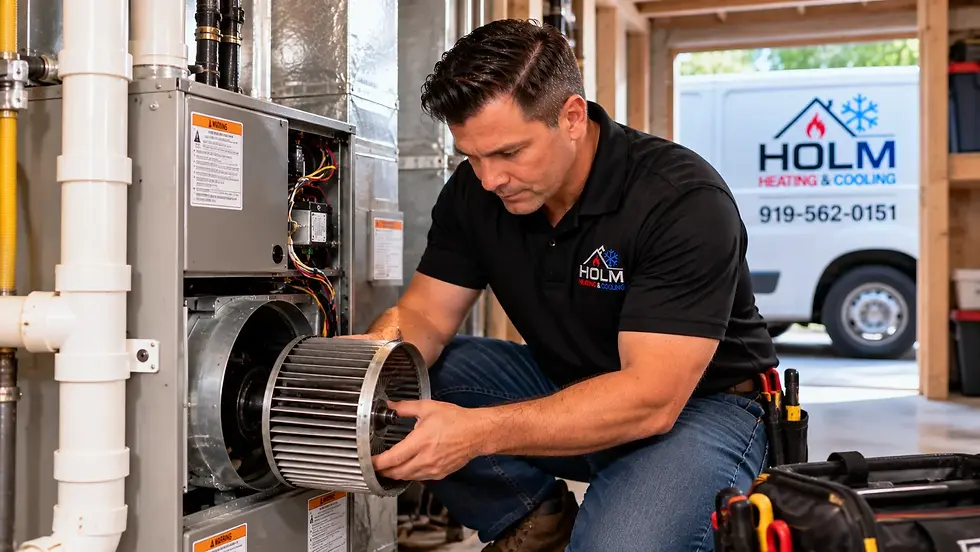
When Should You Call a Furnace Repair Professional?
If your furnace repeatedly turns on and off before your home reaches the desired temperature, it's worth having the system evaluated.
A technician can inspect the system's:
Airflow
Thermostat
Air filter
Blower motor
Safety controls
Flame sensor
Electrical components
Control board
Heating output
Overall furnace operation
Trying to diagnose internal furnace components without the proper training can create safety risks and potentially cause additional damage to the equipment.
Professional furnace repair diagnosis can help determine whether the problem is related to airflow, the thermostat, furnace components, system sizing, or another issue.

Why Is My Furnace Short Cycling?
A furnace that turns on and off frequently doesn't always mean the equipment needs to be replaced.
A dirty filter, restricted airflow, thermostat problem, overheating condition, oversized furnace, faulty safety control, or electrical problem can all contribute to short cycling.
If your furnace is running for unusually long periods instead of cycling off, see our guide on [why your furnace may be running constantly].
If your furnace repeatedly starts and stops before your home reaches the temperature you've selected, identifying the cause is important.
If your furnace is also blowing cold air, see our guide to the common causes of a furnace blowing cold air.
Addressing the problem early may help prevent additional wear on the system and restore more reliable heating.
Frequently Asked Questions
What is furnace short cycling?
Furnace short cycling occurs when a furnace turns on and off repeatedly without completing a normal heating cycle. It can be caused by airflow problems, overheating, thermostat issues, equipment sizing, or other furnace problems.
How often should a furnace cycle?
There isn't one exact cycle length that applies to every home. Furnace run time depends on outdoor temperature, thermostat settings, home size, insulation, equipment capacity, airflow, and other factors.
Can a dirty filter cause furnace short cycling?
Yes. A severely dirty filter can restrict airflow and contribute to furnace overheating, which may cause the system to shut down before completing a heating cycle.
Is furnace short cycling dangerous?
Short cycling can sometimes indicate an overheating, electrical, combustion, or safety-control problem. Because the underlying cause isn't always obvious, repeated short cycling should be properly diagnosed.
Does short cycling mean I need a new furnace?
Not necessarily. Short cycling can have several causes, many of which may be repairable. A qualified HVAC technician can determine whether repair, adjustment, or replacement is appropriate.

Need Furnace Repair in Wake Forest or the Surrounding Area?
If your furnace is turning on and off frequently or isn't keeping your home comfortable, Holm Heating and Cooling can help identify the cause.
We provide professional furnace repair and heating services for homeowners throughout Wake Forest and surrounding communities, including Youngsville, Rolesville, Raleigh, Louisburg, Franklinton, Zebulon, Wendell, and Knightdale.
Contact Holm Heating and Cooling to schedule professional furnace service and get your heating system operating properly again.
Call Today 919-562-0151

Comments