
Why Is My AC Running But Not Cooling?

Updated: Oct 8
Why Is My AC Running But Not Cooling?
Quick Answer
If your AC is running but not cooling, the most common causes are a dirty air filter, thermostat issues, dirty condenser coil, frozen evaporator coil, low refrigerant, electrical problems, or compressor failure. Some issues can be checked safely by homeowners, while others require a professional HVAC technician.
Your air conditioner is running. You can hear the indoor blower, the outdoor unit is operating, and everything seems normal—but your home still feels warm.
If this sounds familiar, you're not alone. It's one of the most common reasons homeowners call us during the summer.
The good news is that an air conditioner that's running but not cooling doesn't always mean you need a new system. In many cases, the problem is something relatively simple, such as a dirty air filter or thermostat setting. Other issues, like low refrigerant or a failing compressor, require professional AC repair.
In this guide, we'll explain the most common reasons why Is my AC running but not Cooling, what you can safely check yourself, and when it's time to call a trusted HVAC professional.

Why Is My Air Conditioner Running but Not Cooling?
There are several reasons your air conditioner may be running without cooling your home effectively. Some problems are quick and inexpensive to fix, while others require specialized equipment and experience.
The most common causes include:
Dirty air filter
Incorrect thermostat settings
Dirty outdoor condenser coil
Frozen evaporator coil
Low refrigerant
Refrigerant leak
Blocked airflow
Electrical component failure
Compressor problems
Let's look at each one in more detail.
1. Dirty Air Filter
A dirty air filter is one of the simplest—and most common—reasons an air conditioner stops cooling properly.
Your HVAC system relies on a steady flow of air moving across the evaporator coil. As the filter becomes clogged with dust, pet hair, pollen, and other debris, airflow is reduced. This makes it harder for your system to remove heat from your home.
In some cases, restricted airflow can even cause the evaporator coil to freeze, making the cooling problem even worse.
Signs of a Dirty Air Filter
Weak airflow from your vents
Longer cooling cycles
Higher electric bills
Uneven temperatures throughout the home
Ice forming on refrigerant lines
What You Can Check
Turn off your HVAC system and remove the air filter. Hold it up to a light source.
If very little light passes through the filter or it's covered with dust and debris, it's time to replace it.
Most homeowners should replace their filter every 1–3 months, although homes with pets or higher dust levels may require more frequent changes.
When to Call a Professional
If replacing the filter doesn't improve cooling within a few hours—or if your system has frozen over—you should schedule professional service. Continuing to run a frozen system can lead to more extensive damage. If your air conditioner keeps freezing up, professional AC repair can help identify the underlying cause and prevent the problem from continuing.
2. Thermostat Problems
Sometimes the issue isn't the air conditioner at all—it's the thermostat.
A thermostat that's incorrectly programmed, has weak batteries, or isn't communicating properly with your HVAC system can prevent your home from reaching the desired temperature.
Before assuming your air conditioner has failed, verify the thermostat settings.
Check These Items
Is the thermostat set to Cool?
Is the fan set to Auto rather than On?
Is the temperature set several degrees below the current room temperature?
Are the batteries fresh (if applicable)?
Is the thermostat screen displaying normally?
Sometimes a simple thermostat adjustment solves the problem in just a few minutes.
When to Call a Professional
If the thermostat appears to be working correctly but your air conditioner still isn't cooling, the issue may lie with the HVAC system itself rather than the controls.
3. Dirty Outdoor Condenser Coil
Your outdoor air conditioning unit has one important job: release the heat that your system removes from inside your home. When the condenser coil becomes covered with dirt, grass clippings, cottonwood, leaves, or other debris, it can't efficiently release that heat.
Think of it like trying to cool off while wearing a heavy winter coat. The heat becomes trapped, forcing your air conditioner to work harder and longer without cooling your home effectively.
A dirty condenser coil can lead to:
Poor cooling performance
Higher energy bills
Longer run times
Increased wear on your system
Premature equipment failure
What You Can Check
Walk outside and inspect your outdoor unit.
Look for:
Grass clippings packed against the coil
Leaves or pine straw around the unit
Dirt covering the aluminum fins
Shrubs or bushes growing too close

Your outdoor unit should have at least 18 inches of open space on all sides to allow proper airflow.
If you notice light dirt or debris, you can gently rinse the unit with a garden hose after turning off the power. Spray from the inside out if possible, and never use a pressure washer, as it can damage the delicate aluminum fins.
When to Call a Professional
If the coil is heavily clogged, bent, or hasn't been professionally cleaned in several years, it's best to schedule a maintenance visit. Professional coil cleaning uses specialized products and techniques that safely restore efficiency without damaging the equipment.
4. Frozen Evaporator Coil
Many homeowners are surprised to learn that ice on an air conditioner usually means something is wrong—not that it's cooling exceptionally well.
Your evaporator coil is located inside your home, usually above the furnace or inside the air handler. When airflow becomes restricted or refrigerant levels are low, the coil can become so cold that moisture in the air freezes into ice.
Once the coil freezes, airflow drops dramatically and your air conditioner may continue running without cooling your home. If your air conditioner is running for long periods or seems to run constantly, there may be an underlying issue that needs attention. Learn more about the common causes of an AC that won't stop running.
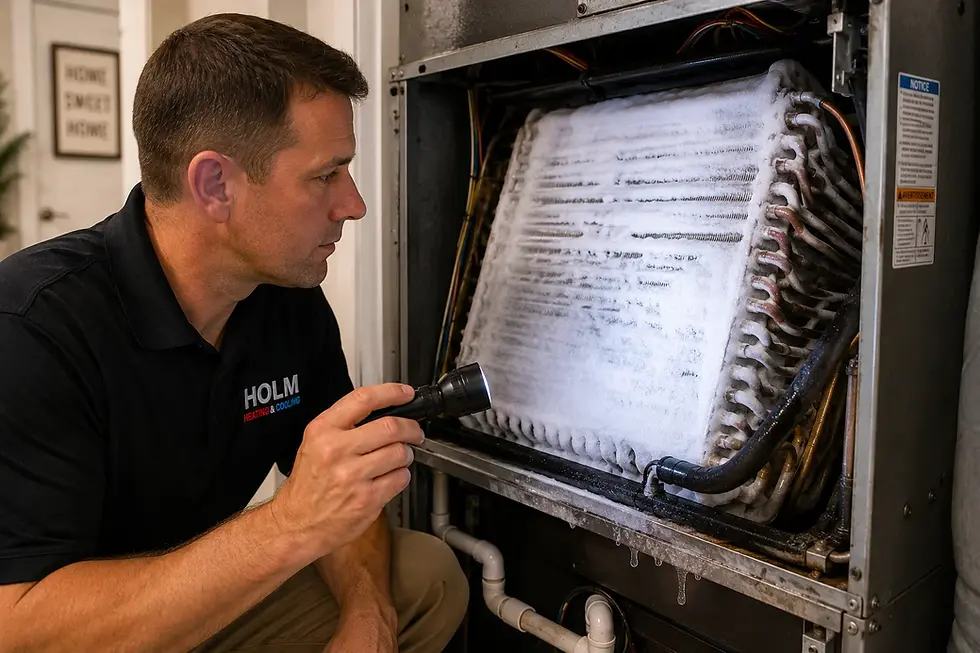
Ice on the refrigerant lines
Ice visible around the indoor unit
Very little airflow from supply vents
Warm air coming from the vents
Water around the indoor unit after the ice melts
What You Should Do
If you suspect your evaporator coil is frozen:
Turn your thermostat from Cool to Off.
Set the fan to On to help thaw the ice.
Allow several hours for the coil to completely defrost.
Replace the air filter if it's dirty.
After the ice has melted, you can try restarting your system.
If the coil freezes again, there's an underlying problem that should be diagnosed by an HVAC professional. When a frozen evaporator coil eventually thaws, the resulting water can sometimes lead to leaks around the indoor unit. Learn more about the common causes of AC water leaks and what to do if your system is leaking water.
Several issues can cause freezing, including:
Dirty air filters
Blocked supply or return vents
Dirty evaporator coil
Blower motor problems
Low refrigerant from a leak
If your AC keeps freezing up, our guide to why an air conditioner freezes explains the most common causes and what homeowners should do next.
Because several different problems can produce the same symptom, professional AC Diagnostic is often needed to determine the exact cause. If your air conditioner freezes up, it can also cause the system to stop cooling properly. Learn more about what to check when your AC is running but not cooling.
Homeowner Tip
If you see ice anywhere on your air conditioner, don't keep lowering the thermostat in hopes that it will cool faster. Doing so can make the problem worse. Turn the system off, allow it to thaw, and call for an HVAC service if the issue returns.
5. Low Refrigerant
Your air conditioner doesn't use refrigerant like a car uses gasoline. Refrigerant operates inside a sealed system and should never be "used up" during normal operation.
If your air conditioner is low on refrigerant, there's almost always a leak somewhere in the system.
When refrigerant levels drop, your AC loses its ability to absorb heat from inside your home. As a result, the system may continue running for hours without reaching the temperature you've set on the thermostat.

Common Signs of Low Refrigerant
Warm air coming from your vents
Longer cooling cycles
Higher utility bills
Ice forming on refrigerant lines
Hissing or bubbling sounds near the indoor or outdoor unit
Poor cooling during the hottest part of the day
Can You Add Refrigerant Yourself?
No.
Modern air conditioning systems require specialized tools, EPA-certified refrigerant handling, and accurate pressure testing. Simply adding refrigerant without repairing the leak is only a temporary fix, and the problem will return.
A qualified HVAC service technician should:
Locate the refrigerant leak
Repair the damaged component
Perform a leak test
Recharge the system to the manufacturer's specifications
Verify proper system performance
6. Refrigerant Leaks
Refrigerant leaks can develop for several reasons, including normal wear, corrosion, vibration, or damage to the refrigerant lines.
Even a small leak can significantly reduce your air conditioner's efficiency over time.
Unlike a water leak, refrigerant leaks are often difficult to see without specialized electronic leak detectors or other professional testing equipment.
Signs You May Have a Refrigerant Leak
Your AC never seems to cool the house completely.
The system runs almost constantly.
Energy bills continue increasing.
Cooling performance gets worse each summer.
Ignoring a refrigerant leak can place additional strain on your compressor, which is one of the most expensive components in an air conditioning system. If your air conditioner is running almost constantly, learn about the common causes of an AC that won't stop running.
Why Professional Repair Matters
Some companies simply add refrigerant and leave.
At Holm Heating & Cooling, we believe in finding the source of the problem first. Repairing the leak before recharging the system helps restore efficiency, protects your equipment, and reduces the chance of future breakdowns.
7. Electrical Problems
Modern air conditioners rely on several electrical components working together to start and operate the system safely.
If just one component fails, your air conditioner may continue running partially while failing to cool your home properly.

Some of the most common electrical issues include:
Weak or failed capacitor
Worn contactor
Loose electrical connections
Faulty relay
Damaged wiring
Blower motor problems
Because these components control different parts of the cooling process, the symptoms can vary widely. If your air conditioner is repeatedly starting and stopping, learn more about the common causes of AC short cycling and what you can do about it.
Warning Signs of Electrical Problems
Outdoor unit won't start
System starts and stops repeatedly
Buzzing or humming sounds
Breaker trips frequently
Burning odors
Intermittent cooling
Don't Ignore Electrical Issues
Electrical problems rarely fix themselves.
Continuing to operate your air conditioner with a failing electrical component can sometimes cause additional damage to motors or compressors.
If you notice unusual noises, burning smells, or repeated breaker trips, turn the system off and schedule professional service.
Why Regular HVAC Maintenance Helps Prevent Cooling Problems
Many of the issues discussed in this guide can be identified long before they leave you without air conditioning on a hot summer day.

Professional HVAC maintenance allows technicians to:
Replace or inspect air filters
Clean condenser coils
Check refrigerant pressures
Inspect electrical components
Test system performance
Identify worn parts before they fail
Improve efficiency and extend equipment life
Scheduling preventive maintenance each spring helps your air conditioner operate more efficiently, reduces the risk of unexpected breakdowns, and can help lower your energy costs throughout the cooling season.
Homeowner Tip
8. Compressor Problems
The compressor is often called the "heart" of your air conditioning system because it's responsible for circulating refrigerant throughout the cooling cycle. Without a properly functioning compressor, your air conditioner can't effectively remove heat from your home.

When a compressor begins to fail, your system may still appear to be running, but it won't cool your home as it should.
Signs of Compressor Problems
Warm air coming from the vents
Outdoor unit running without cooling
Loud buzzing, clicking, or grinding noises
Circuit breaker trips repeatedly
Difficulty starting the system
Reduced cooling performance
Compressor problems can result from normal wear and tear, electrical issues, overheating, or operating with low refrigerant for an extended period.
Because the compressor is one of the most expensive components in an HVAC system, early diagnosis is important. Addressing the underlying issue before complete compressor failure can sometimes prevent more costly repairs.
9. Blocked Supply or Return Vents
Your HVAC system depends on unrestricted airflow throughout your home. Even if your air conditioner is operating correctly, blocked vents can make rooms feel warmer than they should.
Many homeowners accidentally reduce airflow by placing furniture, rugs, or curtains over supply registers or return air grilles.

Check for These Common Problems
Closed supply vents
Furniture blocking registers
Rugs covering floor vents
Curtains restricting airflow
Dirty return air grilles
Walk through your home and make sure every supply vent is open and unobstructed. This simple inspection can improve airflow and help your air conditioner cool more efficiently.
10. Leaky or Damaged Ductwork
Your ductwork carries cooled air from your HVAC system to every room in your home. If the ducts develop leaks, loose connections, or damage, a significant amount of conditioned air may escape before it reaches your living spaces.
In many homes, ductwork runs through attics or crawl spaces. If cooled air leaks into these unconditioned areas, your system has to work much harder to maintain a comfortable indoor temperature.

Signs of Duct Problems
Some rooms are much warmer than others
Weak airflow from certain vents
Higher utility bills
Excessive dust in the home
Long cooling cycles
Properly sealed ductwork helps improve comfort, increase energy efficiency, and reduce unnecessary strain on your HVAC system.
Some cooling problems have simple solutions, but others require specialized equipment and professional experience.

It's time to schedule service if you notice:
Your air conditioner is running but continues blowing warm air.
Ice repeatedly forms on the refrigerant lines or evaporator coil.
Your circuit breaker trips frequently.
You hear grinding, buzzing, or banging noises.
You suspect a refrigerant leak.
Your home won't cool after replacing the air filter and checking the thermostat.
Water is leaking around your indoor unit.
Your air conditioner runs constantly without reaching the thermostat setting.
Ignoring these warning signs can lead to more extensive damage and more expensive repairs and even require new AC installation. If your AC is also leaking water, learn about the common causes of AC water leaks and what you should do next.
At Holm Heating & Cooling, we believe in identifying the root cause of the problem—not just treating the symptoms. Our goal is to provide honest recommendations and dependable AC repairs that restore your comfort as quickly as possible. If your AC is running but not cooling, professional AC repair can help identify the underlying problem and restore reliable cooling.
Quick Homeowner Troubleshooting Checklist
Before scheduling a service appointment, take a few minutes to check these common items.
✔ Thermostat is set to Cool
✔ Temperature is set below the current room temperature
✔ Air filter has been replaced recently
✔ Supply vents are open
✔ Return vents are unobstructed
✔ Outdoor condenser is free of leaves and debris
✔ Circuit breaker has not tripped
✔ No ice is visible on the refrigerant lines
If you've checked these items and your air conditioner still isn't cooling properly, professional diagnosis is the next step.
Conclusion
When your air conditioner is running but not cooling, the problem isn't always obvious. Something as simple as a dirty air filter can reduce cooling performance, while issues such as low refrigerant, electrical failures, or compressor problems require professional attention.
The sooner you identify the cause, the better your chances of preventing more extensive damage and restoring your home's comfort.
Routine maintenance, replacing air filters regularly, and addressing small problems early can help keep your air conditioning system operating efficiently throughout the summer.
If you're unsure what's causing the problem, it's always better to have your system inspected before a minor issue turns into a major repair or require new AC installation.
Doug Holm is the owner of Holm Heating & Cooling and has more than 30 years of experience as a technician. I Help homeowners throughout Wake Forest and the surrounding communities with professional heating and cooling services. His commitment to honest recommendations, dependable workmanship, and exceptional customer service has earned the trust of homeowners across the area.
Frequently Asked Questions
Why is my AC running but blowing warm air?
If your air conditioner is running but blowing warm air, the problem could be something as simple as an incorrect thermostat setting or a dirty air filter. More serious causes include low refrigerant, a frozen evaporator coil, electrical problems, or compressor failure. If basic troubleshooting doesn't restore cooling, it's best to have your system inspected by a qualified HVAC technician.
Can a dirty air filter stop my AC from cooling?
Yes. A clogged air filter restricts airflow across the evaporator coil, making it difficult for your air conditioner to cool your home efficiently. In some cases, restricted airflow can even cause the evaporator coil to freeze, reducing cooling performance even further. Replacing your air filter every 1–3 months is one of the easiest ways to help your HVAC system operate efficiently.
Should I turn my AC off if it's frozen?
Yes. If you notice ice on your refrigerant lines or evaporator coil, turn your thermostat to Off and set the fan to On. This allows the ice to melt safely. Continuing to run a frozen air conditioner can cause additional damage. If the system freezes again after restarting, schedule professional service to identify the underlying cause.
How often should I replace my air filter?
Most homeowners should replace their HVAC air filter every 1 to 3 months. Homes with pets, smokers, or higher levels of dust and pollen may need more frequent filter changes. A clean filter helps improve airflow, indoor air quality, and overall system efficiency.
Can low refrigerant damage my air conditioner?
Yes. Low refrigerant forces your air conditioner to work harder and can eventually damage the compressor. Since refrigerant operates in a sealed system, low levels usually indicate a leak that should be repaired by a licensed HVAC professional.
Why is my upstairs warmer than downstairs?
Warm upstairs rooms are a common complaint, especially during the summer. Causes may include poor airflow, inadequate attic insulation, leaky ductwork, blocked vents, thermostat location, or an improperly sized HVAC system. A professional evaluation can help determine the specific cause and recommend the best solution.
How long should it take for my home to cool down?
The exact time depends on the outdoor temperature, your home's insulation, and the size of your air conditioner. Under normal conditions, most systems should lower the indoor temperature by 1 to 2 degrees per hour. If your system runs continuously without making progress, there may be an underlying problem that needs attention.
When should I repair my air conditioner instead of replacing it?
If your air conditioner is relatively new and the repair is minor, repairing the system is often the most cost-effective option. However, if your system is 10–15 years old, requires frequent repairs, or needs an expensive component such as a compressor, replacement may provide better long-term value. A trusted HVAC professional can help you compare your options based on the condition of your system and determine whether AC repair or a new air conditioning installation makes the most sense.
Is annual HVAC maintenance really necessary?
Yes. Preventive maintenance helps identify small problems before they become major repairs. During a maintenance visit, an HVAC technician can clean critical components, check refrigerant levels, inspect electrical connections, test system performance, and help improve efficiency. Regular maintenance can also extend the life of your heating and cooling system.
Why should I choose Holm Heating & Cooling?
Holm Heating & Cooling is a family-owned and operated HVAC company. With more than 30 years' experience as a technician. We serve homeowners in Wake Forest and the surrounding communities. We believe in honest recommendations, dependable workmanship, and treating every customer with respect. Whether you need AC repair, maintenance, or a new system, our goal is to provide reliable comfort you can count on.
Need Professional AC Repair?
If your air conditioner is running but not cooling, the experienced team at Holm Heating & Cooling is here to help.
With more than 30 years of experience as a technician, we provide honest recommendations, quality workmanship, and dependable service for homeowners throughout Wake Forest and the surrounding communities.
Whether the problem is a dirty coil, low refrigerant, an electrical issue, or a failing compressor, we'll carefully diagnose the cause and explain your repair options so you can make an informed decision.
If you need professional AC repair in Wake Forest, Raleigh, Rolesville, Youngsville, Franklinton, Louisburg, Knightdale, Wendell, or Zebulon,
to schedule service and get your home comfortable again.


Comments